

Colon polyps are small growths that develop on the inner lining of the colon (large intestine) or rectum. They are relatively common, particularly as people get older, and most do not cause any symptoms.
Most colon polyps are not cancerous. However, certain types can gradually develop into colorectal cancer over several years. While not all polyps become cancerous, most colorectal cancers develop from precancerous polyps. Identifying and removing these polyps before they become cancerous is one of the reasons colorectal cancer screening is important.
Polyps can be detected through screening tests and during a colonoscopy, where they can often be removed at the same time and sent to a laboratory for examination.
In Singapore, colorectal cancer is one of the most commonly diagnosed cancers. National screening recommendations advise adults at average risk to begin regular colorectal cancer screening from the age of 50. However, international guidelines, including those from the American College of Gastroenterology (ACG), recommend starting screening from the age of 45.
Due for colorectal cancer screening or concerned about colon polyps?
When symptoms do occur, they may include:
These symptoms can have many causes and do not necessarily mean that you have a colon polyp or colorectal cancer. However, persistent or unexplained changes should be assessed.
Most people with colon polyps do not know they have them because polyps commonly develop without causing symptoms.
This is why screening is important so that polyps can be identified before they cause problems.
Polyps develop when cells in the lining of the colon grow abnormally.
It is not always possible to identify exactly why a particular person develops them.
However, several factors are associated with an increased likelihood of colon polyps and colorectal cancer.
Polyps become more common as people get older, which is one reason colorectal cancer screening is recommended from a certain age even when you feel well.
Personal or family history
Your likelihood may be higher if:
The age at which your relative was diagnosed and the number of affected relatives can influence your individual risk.
People who have had ulcerative colitis or Crohn’s disease affecting the colon for many years can have a higher risk of colorectal cancer and may require a different colonoscopy surveillance schedule.
Inherited conditions
A small proportion of people have inherited genetic conditions that substantially increase their tendency to develop colon polyps or colorectal cancer.
These include conditions such as familial adenomatous polyposis (FAP) and Lynch syndrome.
Polyps become more common as people get older, which is one reason colorectal cancer screening is recommended from a certain age even when you feel well.

Your likelihood may be higher if:
The age at which your relative was diagnosed and the number of affected relatives can influence your individual risk.

People who have had ulcerative colitis or Crohn’s disease affecting the colon for many years can have a higher risk of colorectal cancer and may require a different colonoscopy surveillance schedule.

A small proportion of people have inherited genetic conditions that substantially increase their tendency to develop colon polyps or colorectal cancer.
These include conditions such as familial adenomatous polyposis (FAP) and Lynch syndrome.
Adenomas are a common type of precancerous polyp. Most will never become cancer, but some can gradually develop into colorectal cancer if left in place.
Some serrated polyps also have the potential to develop into colorectal cancer, particularly depending on their size, type and location.
Other types of polyps have little or no potential to become cancerous.
You usually cannot tell what type of polyp you have simply by looking at it. After a polyp is removed, it is generally sent for histological examination, where the tissue is examined under a microscope.
The result helps determine whether further follow-up is required.
No. There are several types of colon polyps, and their likelihood of becoming cancerous varies.
Because most polyps do not cause symptoms, they are often discovered through colorectal cancer screening.
Faecal Immunochemical Test (FIT)
The Faecal Immunochemical Test (FIT) checks a stool sample for small amounts of blood that may not be visible.
A positive FIT result does not necessarily mean that you have cancer. Bleeding can occur for different reasons, but a positive result generally needs to be followed up with a colonoscopy to identify the source.
CT colonography
CT Colonography (or Virtual Colonoscopy) uses X-rays to obtain an interior view of the colon. It does not require sedation. Although, it is less invasive than colonoscopy, it may miss smaller polyps. Additionally, if polyp(s) is found on CT colonography, we would then need to proceed to a colonoscopy to remove the polyps.
Colonoscopy
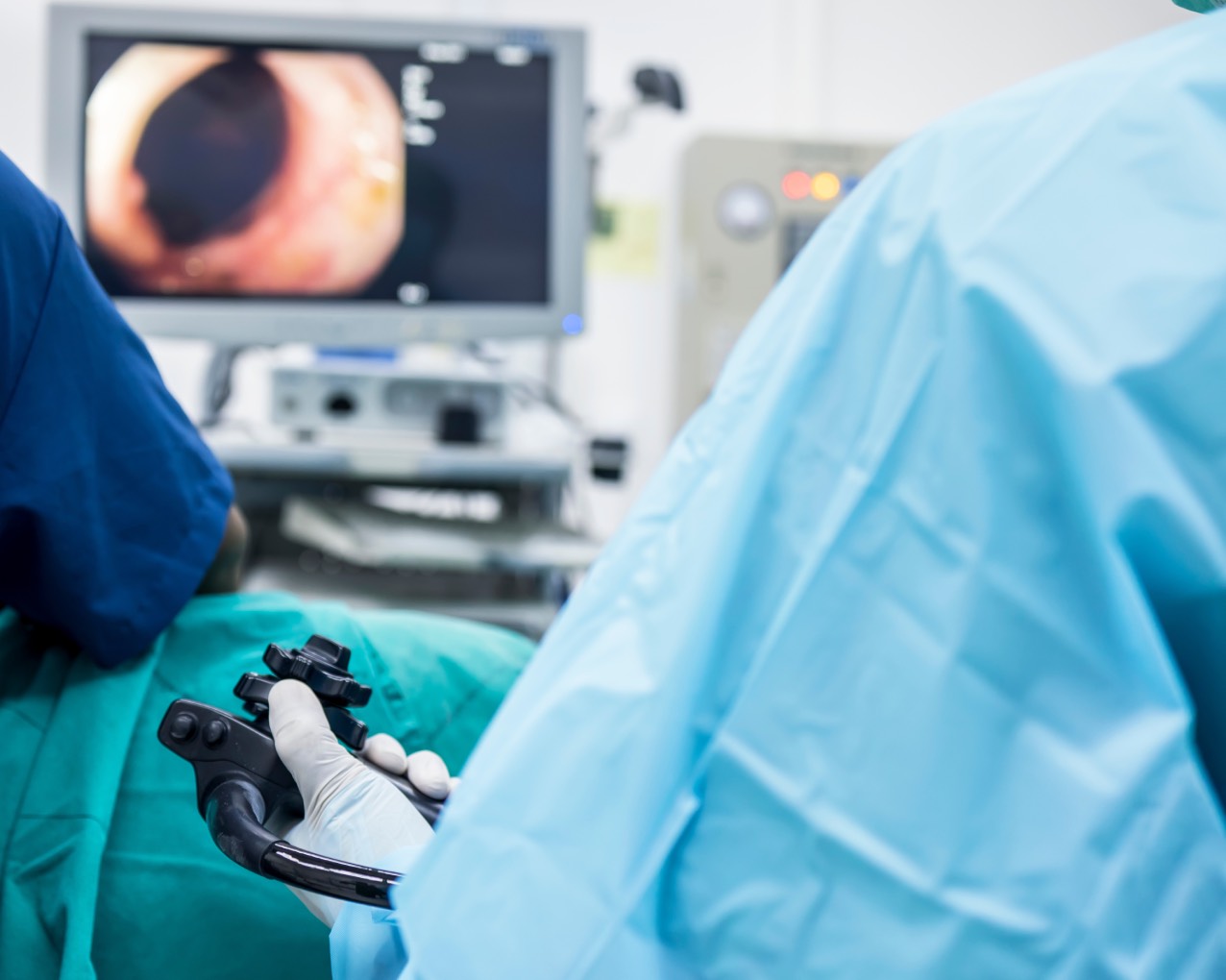
A colonoscopy allows your gastroenterologist to examine the lining of the colon and rectum using a thin, flexible tube with a camera.
If a polyp is found, it can often be removed during the same procedure and sent to a laboratory for examination.
This is one of the advantages of colonoscopy: it can both detect and remove precancerous polyps.
The main treatment for a colon polyp is removal.
Most polyps can be removed during a colonoscopy, so a separate operation is usually not required.
The technique used depends on the size, shape and location of the polyp.
Small polyps can often be removed using an instrument passed through the colonoscope. Larger or more complex polyps may require specialised endoscopic techniques.
The removed tissue is then sent for examination to determine the type of polyp and whether there are any concerning changes.
Most colon polyps do not require surgery.
Surgery may occasionally be considered when a polyp is very large or difficult to remove safely through colonoscopy, or if examination shows that cancer is present and further treatment is required.
Your doctor will discuss the appropriate next steps based on the individual findings.

Finding a polyp does not necessarily mean that you will need frequent colonoscopies for the rest of your life.
Your doctor will recommend when your next colonoscopy should be performed based on factors such as:
Some people will need an earlier follow-up colonoscopy, while others may not need another examination for several years.
It is important to follow the surveillance interval recommended for you rather than arranging colonoscopies more frequently than necessary.

If you have persistent upper digestive symptoms or have been advised to undergo a gastroscopy, a gastroenterologist can assess your symptoms and advise whether the procedure is appropriate for you.
Dr Amitabh Monga
Senior Consultant Gastroenterologist
No. Most colon polyps are not cancerous.
However, certain types of polyps have the potential to develop into colorectal cancer over time. Removing these polyps can help prevent this progression.
After a polyp is removed, it is examined in a laboratory to determine its type and whether any concerning changes are present.
Polyps are generally not expected to disappear on their own. If a potentially precancerous polyp is identified during colonoscopy, it is usually removed where this can be done safely.
It depends on what was found.
The recommended interval is based on the number, size and type of polyps, laboratory results, how completely they were removed and other individual risk factors.
Your gastroenterologist will advise when your next colonoscopy should be performed based on these findings.
For people at average risk, Singapore's national screening recommendations currently advise colorectal cancer screening from 50 years of age.
Screening may need to begin earlier if you have a strong family history, certain inherited conditions, inflammatory bowel disease or other factors that increase your risk.
Speak to your doctor about the appropriate starting age and screening method for you.
You do not need to wait for symptoms before thinking about colorectal health. Screening can help detect polyps early, when they can often be removed during colonoscopy before they have the opportunity to develop into cancer.