
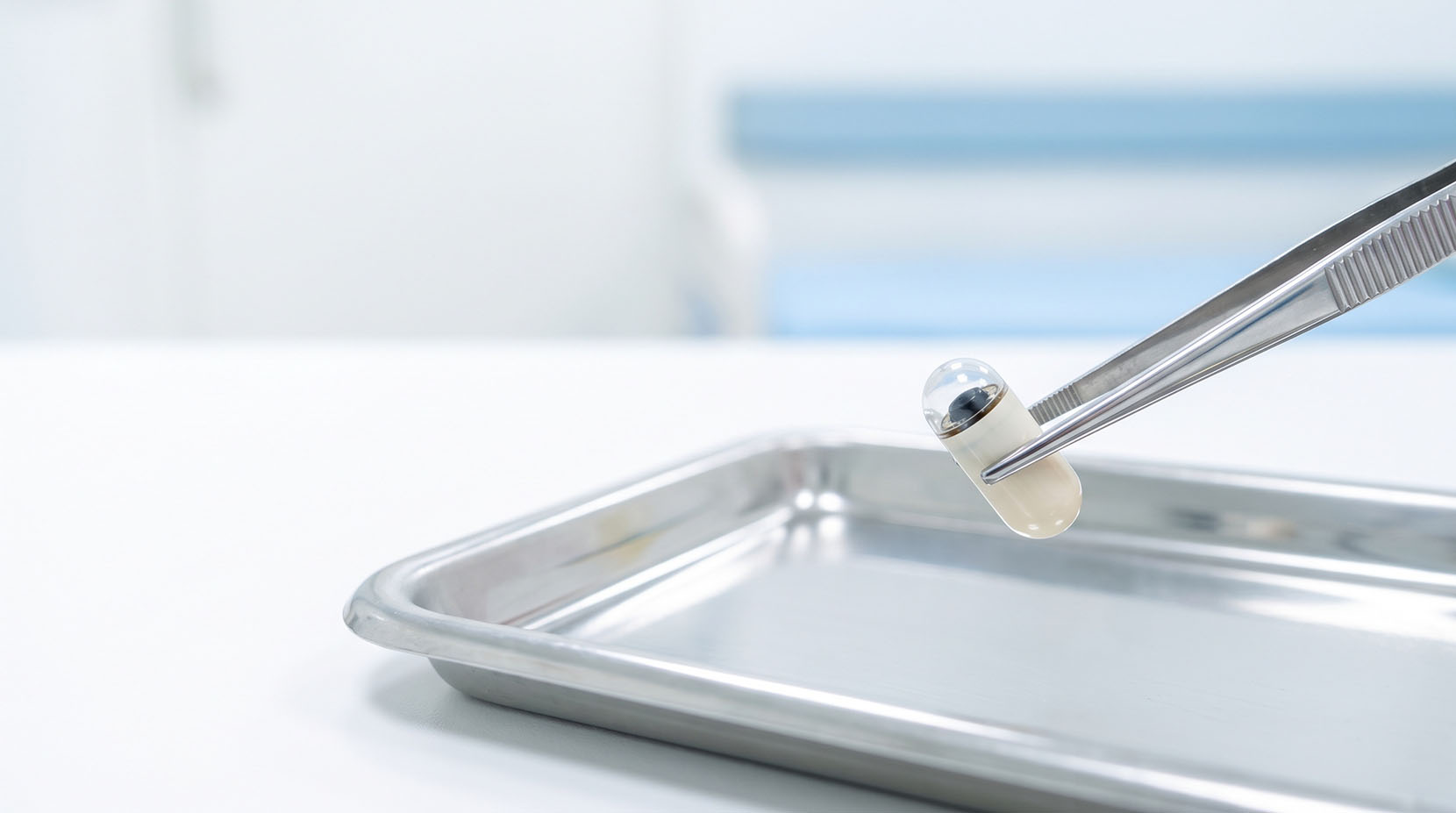
Video Capsule Endoscopy (VCE) is a diagnostic test that uses a small capsule containing a tiny camera to take images of your digestive tract as it passes naturally through your body.
The test is particularly useful for examining the small intestine (small bowel) an area that cannot be fully reached or viewed with a standard gastroscopy or colonoscopy.
After you swallow the capsule, the camera takes thousands of images as it travels through your digestive system. These images are transmitted to a small recording device that you wear during the test and are later reviewed by your gastroenterologist.
There is no endoscope inserted into the digestive tract, and sedation is generally not required.
The capsule is disposable and usually passes naturally in your stool.
Been advised to have a video capsule endoscopy?

Reasons for having VCE may include:
Your doctor may recommend video capsule endoscopy when a condition affecting the small intestine is suspected.
It can be particularly useful when previous investigations such as gastroscopy or colonoscopy have not fully explained your symptoms or test results.

One of the main uses of video capsule endoscopy is to look for a source of bleeding within the small intestine.
This may be considered when blood loss is suspected but the cause has not been identified after appropriate investigations such as Gastroscopy and Colonoscopy.
VCE may identify abnormalities such as small-bowel inflammation, ulcers, abnormal blood vessels, polyps or growths.
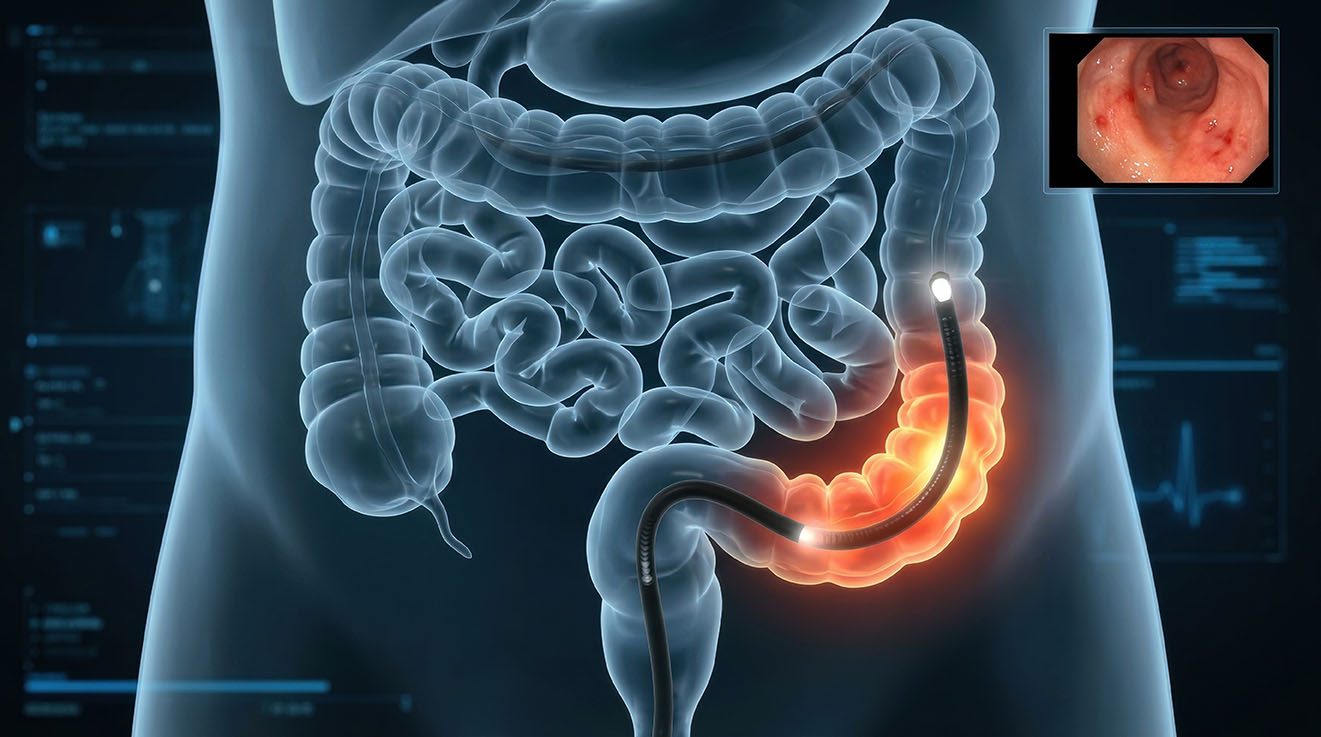
Crohn’s disease can affect any part of the digestive tract, including areas of the small intestine that cannot be easily examined with conventional endoscopy.
Video capsule endoscopy may be used in selected patients to look for inflammation or other changes within the small bowel.
If there is a possibility that the small intestine has become narrowed, your doctor may recommend other investigations or a patency capsule before VCE because of the risk that the video capsule could become stuck.
All three procedures allow doctors to examine different parts of the digestive tract, but they are used for different purposes.
A Gastroscopy uses a flexible endoscope passed through the mouth to examine the:
Biopsies and certain treatments can also be performed during gastroscopy.
A Colonoscopy uses a flexible endoscope passed through the anus to examine the:
Polyps can be removed and biopsies can be taken during colonoscopy.
Video capsule endoscopy is primarily used to examine the small intestine, much of which cannot be reached with standard gastroscopy or colonoscopy.
However, unlike gastroscopy and colonoscopy, the capsule cannot take biopsies, remove polyps or perform treatment.
For this reason, VCE does not simply replace conventional endoscopy. Your doctor will recommend the investigation that is most appropriate for the part of the digestive tract that needs to be examined.
On the day of the test, your healthcare team will prepare the recording equipment.
Depending on the system being used, sensors or a sensor belt may be positioned around your abdomen and connected to a portable recorder.
The capsule is then activated and linked to the recording system.
You will swallow the capsule with water, much like swallowing a large tablet.
Once swallowed, the capsule travels through your digestive tract through the normal movement of your intestines.
As it travels, the camera takes images and sends them wirelessly to the recorder.
Your healthcare team may monitor you for a period after swallowing the capsule to check that it has progressed appropriately.
The process is generally straightforward and does not usually require sedation.
You will usually be able to leave the clinic and continue with many of your usual daily activities while the recording takes place.
You may be asked to:
Follow the instructions given by the clinic, as these may vary depending on the equipment being used.
You should also tell your doctor about all medications and supplements you are taking.
Your small intestine needs to be as clear as possible so that the camera can capture useful images.
You will therefore be asked to fast before the test.
Depending on the protocol being used, you may also be given bowel preparation or dietary instructions before your appointment.
Your clinic will provide specific instructions about:
Follow these instructions carefully, as inadequate preparation can reduce the quality of the images.

One of the main considerations before video capsule endoscopy is whether the capsule will be able to pass safely through the small intestine.
If your doctor thinks there may be a narrowing or blockage, a patency capsule may sometimes be recommended first.
A patency capsule is designed to assess whether an object approximately the size of the video capsule can pass through your digestive tract.
Unlike the video capsule, it does not take images and is designed to dissolve if it remains in the bowel.
A patency capsule may be considered in people with a higher likelihood of narrowing, such as some patients with:
Not everyone requires a patency capsule. Your doctor will assess whether it is appropriate for you.

At the end of the recording period, you will return or remove the recording equipment according to the instructions provided by the clinic.
The images captured by the capsule are then downloaded and reviewed by your gastroenterologist.
Unlike a standard photograph or scan, VCE produces thousands of images, so your doctor needs time to carefully review the recording before discussing the results with you.

The capsule continues travelling through your digestive tract and is usually passed naturally during a bowel movement.
You do not normally need to retrieve or return it.
You may not notice when the capsule passes.
If there is concern that the capsule has not passed, your doctor may recommend an X-ray or another test to check its location.
However, finding an abnormality on capsule endoscopy does not always provide a final diagnosis.
Depending on the findings, your doctor may recommend further imaging, blood tests or another endoscopic procedure to obtain a biopsy or provide treatment.

VCE can identify changes affecting the lining of the small intestine, including:
Video capsule endoscopy is generally well tolerated.
The main recognised risk is capsule retention, where the capsule becomes stuck within the digestive tract rather than passing naturally.
This is uncommon, but the likelihood is higher in people who have narrowing of the small intestine.
Conditions associated with an increased risk can include:
If there is concern about narrowing, your doctor may recommend imaging or a patency capsule before proceeding with VCE.
If a capsule becomes retained, it does not always cause symptoms. However, further assessment is needed, and in some situations an endoscopic procedure or surgery may be required to remove it.
Tell your doctor if you have swallowing difficulties.
If swallowing the capsule is considered unsafe or difficult, your doctor can advise whether VCE is appropriate or whether another method of investigation should be considered.

You should not undergo an MRI scan while the video capsule may still be inside your body.
If you need an MRI shortly after VCE and have not confirmed that the capsule has passed, tell your doctor or radiology team that you recently underwent capsule endoscopy.
Your doctor may recommend checking whether the capsule has passed before an MRI is performed.

Most people pass the capsule without any problems.
However, seek medical attention if you develop symptoms such as:
These symptoms may indicate an intestinal blockage and should be assessed.
If you are unsure whether the capsule has passed and require an MRI or another medical procedure, inform your healthcare provider that you recently underwent video capsule endoscopy.

If you have persistent upper digestive symptoms or have been advised to undergo a gastroscopy, a gastroenterologist can assess your symptoms and advise whether the procedure is appropriate for you.
Dr Amitabh Monga
Senior Consultant Gastroenterologist
Gastroscopy examines the oesophagus, stomach and beginning of the small intestine, while Colonoscopy examines the colon and rectum.
Video capsule endoscopy is primarily used to examine the small intestine, which cannot be fully viewed with either of these procedures.
VCE also cannot take biopsies or perform treatment.
No. The video capsule is disposable and is designed to pass naturally through your digestive system. You generally do not need to look for, retrieve or return it.
Capsule retention is uncommon, but it can occur if there is narrowing within the intestine.
If your doctor thinks you may be at increased risk, additional imaging or a patency capsule may be recommended before VCE.
If the capsule does become retained, your doctor will determine whether observation, endoscopic removal or another form of treatment is appropriate.
No. They are designed to examine different parts of the digestive tract.
A colonoscopy allows your doctor to directly examine the colon and remove polyps or take biopsies. Video capsule endoscopy is primarily used to obtain images of the small intestine and cannot perform these treatments.
Your doctor will recommend the procedure appropriate for the area that needs to be investigated.
Video capsule endoscopy provides a way to examine areas of the small intestine that cannot be fully viewed with conventional gastroscopy or colonoscopy.
If you have unexplained gastrointestinal bleeding, suspected small-bowel disease or an abnormality that requires further assessment, speak to our team about whether video capsule endoscopy may be appropriate.